For Linux and DevOps Beginners
Linux and Containers
At the moment, for a Linux/DevOps beginner, the best place to start at iximiuz Labs is the hands-on Docker roadmap. We recommend solving hands-on challenges from the roadmap, starting from the top, and always following the links to the theoretical materials that most challenges include. And of course, don't forget to check the Solution sections if you get stuck or even if you've solved the challenge - there might be an alternative or simpler way, and the editorial solutions may shed some extra light on what's going on under the hood.
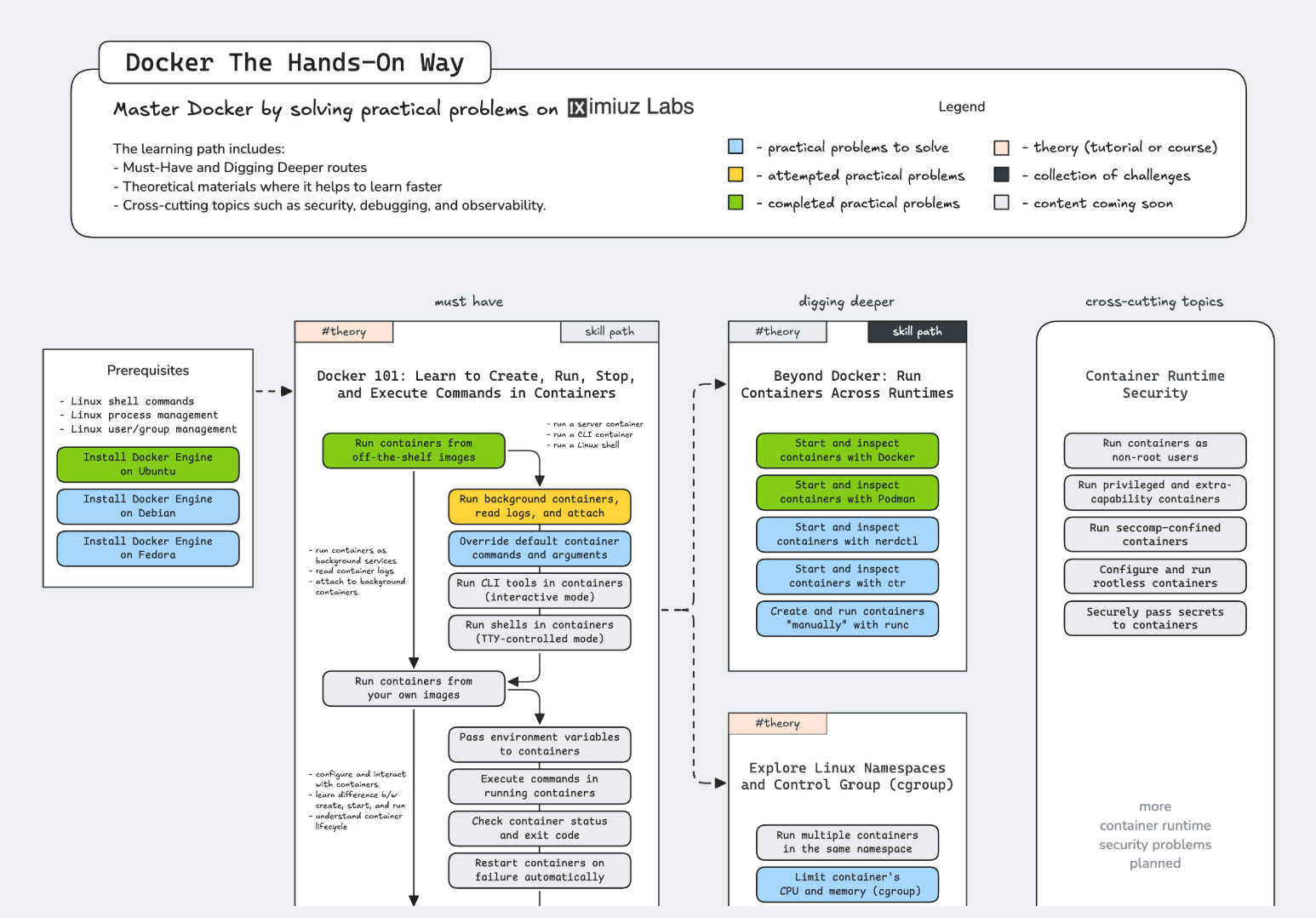
Roadmap: Docker The Hands-on Way
While going through the roadmap materials, you'll get to solve many practical Linux problems. Some in the form of complementary challenges, some as subtasks of Docker-focused challenges. In any case, you'll become much more fluent and confident in using the terminal and operating servers.
Networking
Another beginner-friendly portion of learning materials is the L2 Networking Fundamentals course, augmented by these L3 challenges:
- Configure Routes to Connect Two Private Networks
- Enable Internet Access for a Private Network with a NAT Gateway
The above networking materials can be taken before, after, or in parallel with the Docker roadmap.
After getting through a couple of dozen Docker challenges and studying the networking fundamentals materials, it's a good time to take the Container Networking from Scratch tutorial.
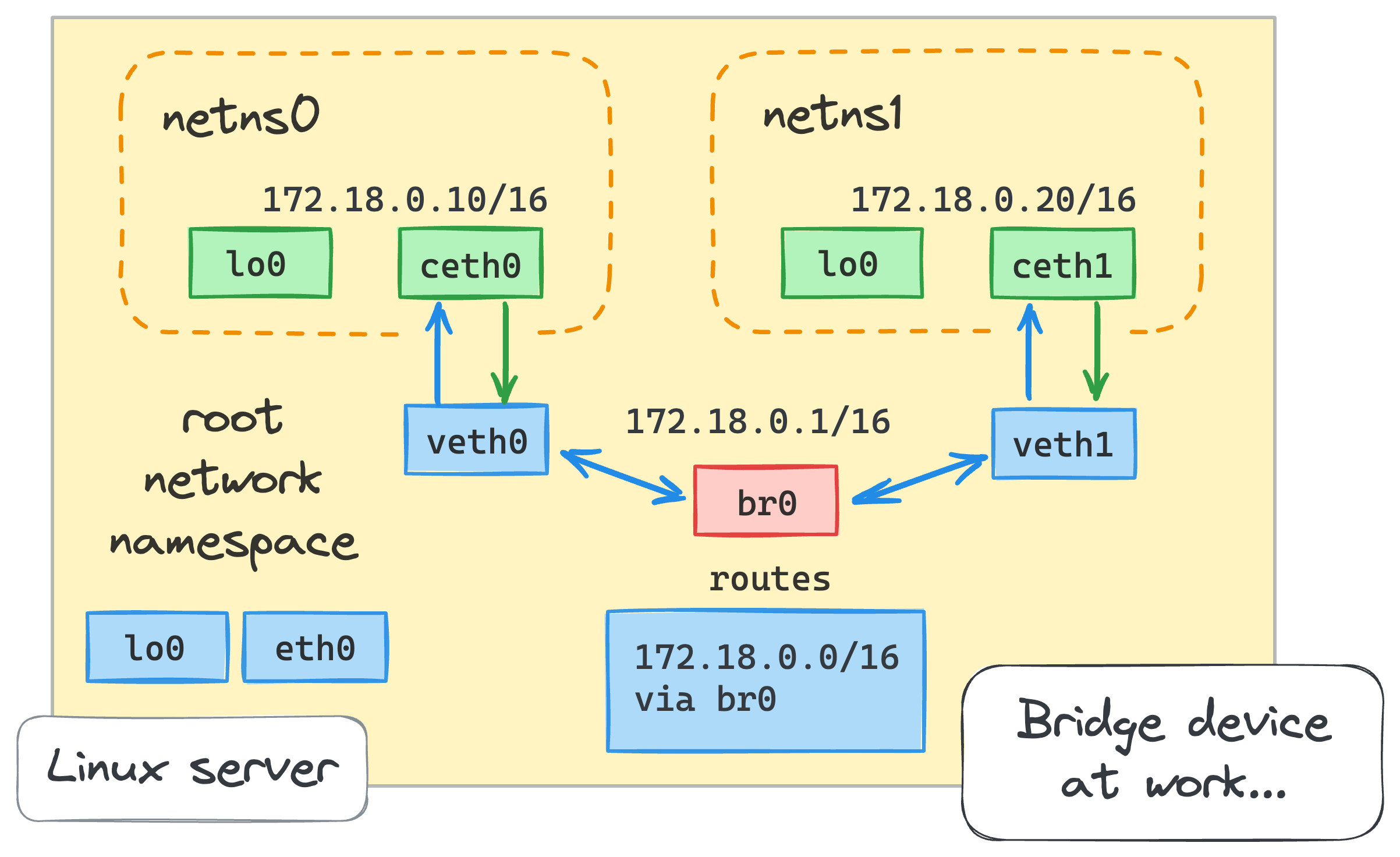
The applicability of the knowledge in it is much broader than just Docker bridge networks - it's the foundation everyone needs before approaching the more complex Kubernetes networking model, and it'll also come in handy while learning other virtualization tech (e.g., Firecracker, QEMU, VirtualBox VMs, Lima, Kata Containers, etc.).
Kubernetes
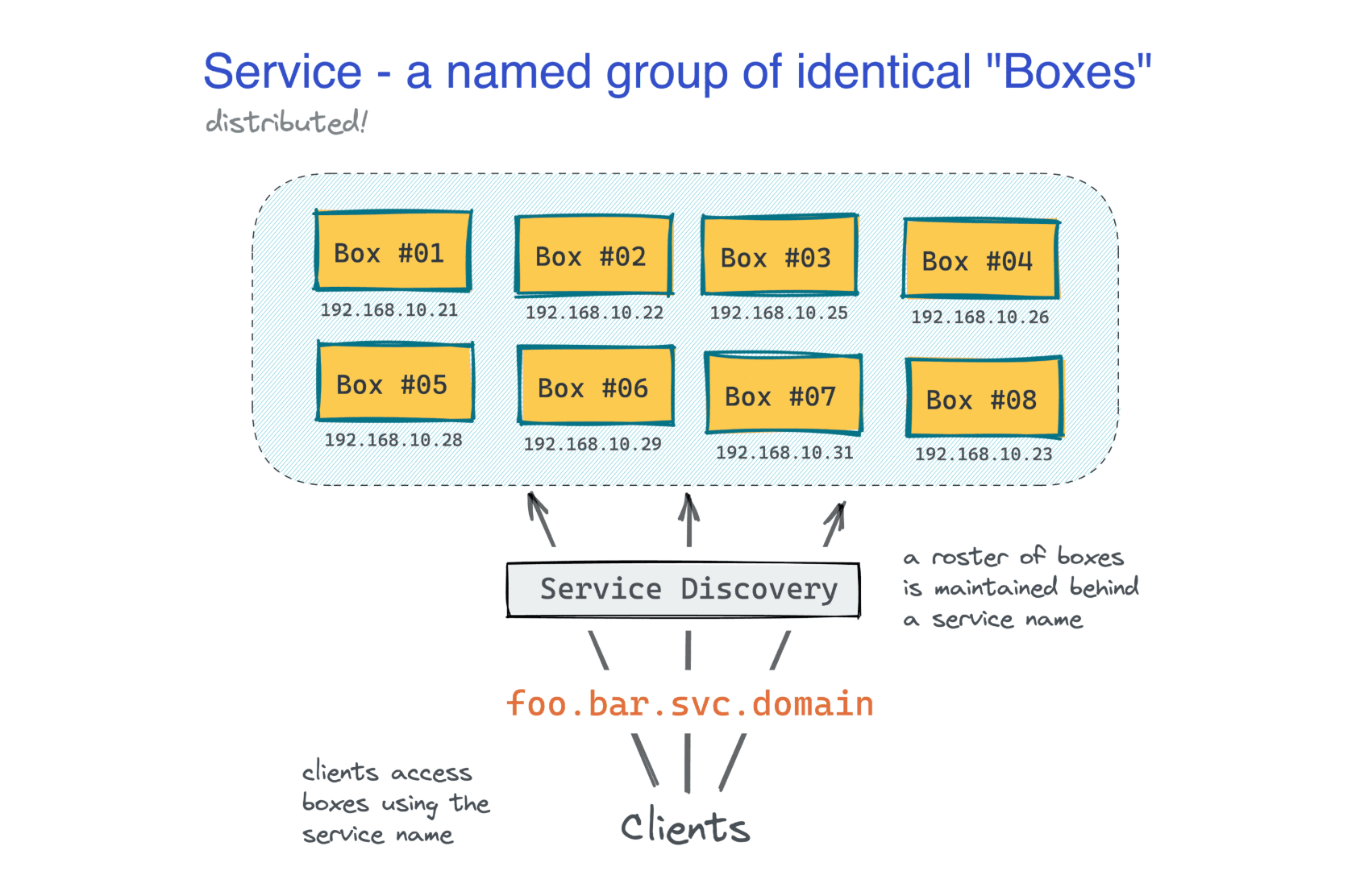
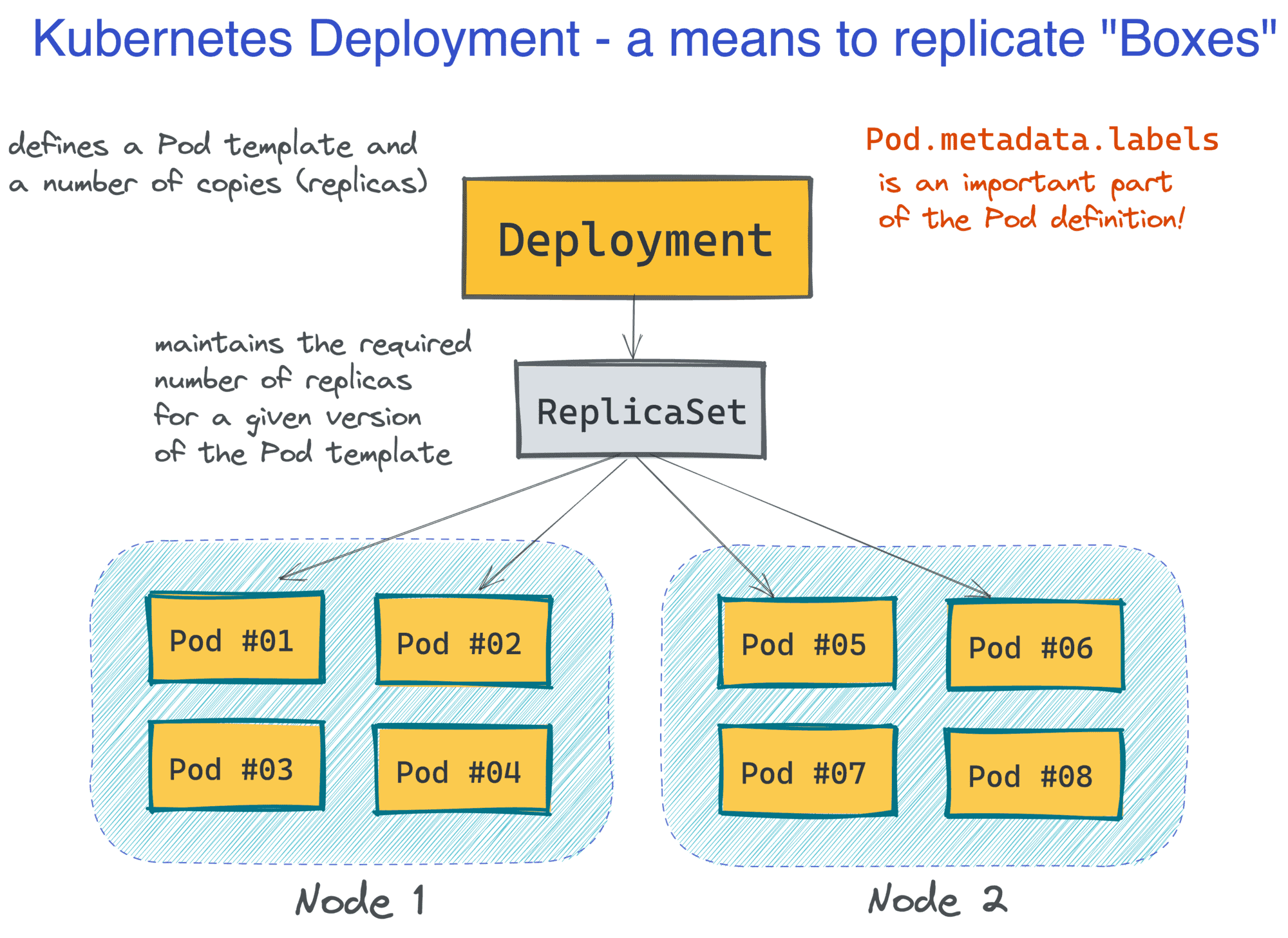
For people with prior Linux and container experience, or those who are eager to jump straight into Kubernetes, we recommend starting with the How Kubernetes Reinvented Virtual Machines tutorial. This tutorial provides a unique perspective that will help you connect the dots between the traditional VM model, containers, and orchestrators like Kubernetes.
The next logical step is to take the Docker Containers vs. Kubernetes Pods tutorial, and finally get your hands dirty by solving practical Kubernetes challenges.
Free-form Experimentation
Finally, we need to emphasise that iximiuz Labs is not a single course but a fully-fledged learning and experimentation platform. One of the key features of iximiuz Labs is its Playgrounds. In essence, they are remote, preconfigured Linux VMs that are ideal for practicing Linux, networking, Docker, or Kubernetes in a safe, controlled environment. Most of the platform's learning materials embed a playground on the side to help you practice what you've just read, but you can (and should) use standalone playgrounds for your learning tasks, too.
A typical example: while studying system design, you may want to explore the traditional 3-tier web app architecture, and the best way to do it is to actually deploy an API server, a database, and a client and explore how they interact with each other. Luckily, there are some really good sample application collections, which you can deploy to your playground - see Awesome Docker Compose samples or Kubernetes application examples. Plus, you can find some inspiration by browsing our Community Playgrounds catalog.
- Previous
- Our Focus and Approach