Using Go for Systems Programming

by Başar Subaşı
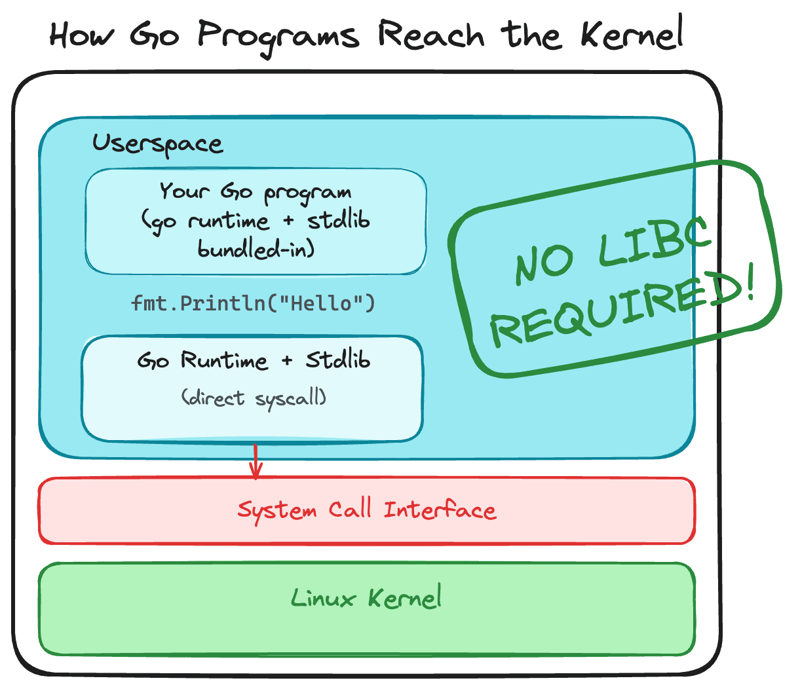
Discover how Go functions under the hood as a modern systems programming language. Learn how Go makes system calls directly, resulting in self-contained binaries that have no libc dependencies.
Tutorials, challenges, courses, skill paths, playgrounds, and more — search the whole library in one place.
Discover how Go functions under the hood as a modern systems programming language. Learn how Go makes system calls directly, resulting in self-contained binaries that have no libc dependencies.
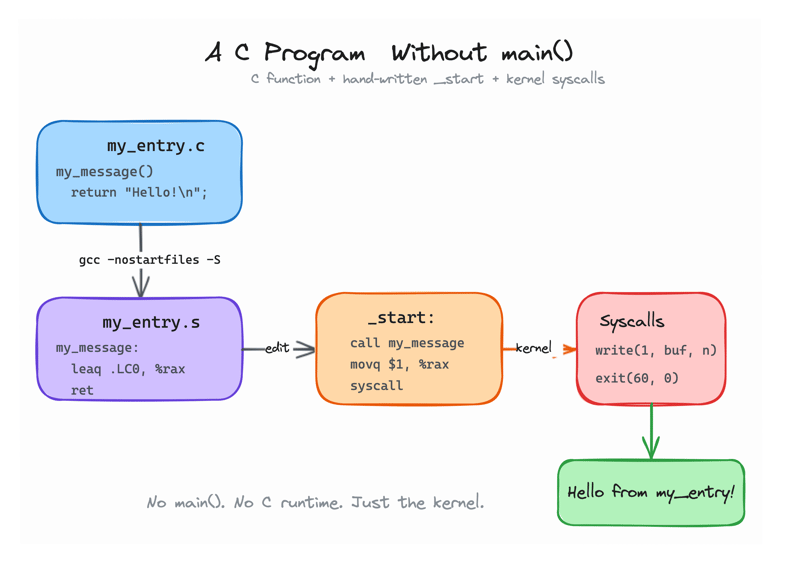
Walk through the C compilation pipeline: preprocessor, compiler, assembler, and linker. Start with a normal hello world, inspect macros and generated assembly, and end by producing a running binary that has no main() function.
Refactor a slow, single-threaded C file downloader that fetches files sequentially into a multi-threaded program using POSIX Threads (pthreads) to achieve concurrent downloads.
Write a C program that calls fork() to clone a process and execve() to execute a command, then print and retrieve the child process PID.
Compile a small C loop with -O2 -S, inspect the generated assembly, report how many add instructions gcc produced and see how much it has optimized the equasion.
Run gcc -E on a small C program and find the exact line where the preprocessor expanded a macro into a printf call.