Linux Processes: From a Program to a Process

by Başar Subaşı
Explore what a program is, when it actually becomes a process and how the Linux scheduler manages process execution.
Tutorials, challenges, courses, skill paths, playgrounds, and more — search the whole library in one place.
Explore what a program is, when it actually becomes a process and how the Linux scheduler manages process execution.
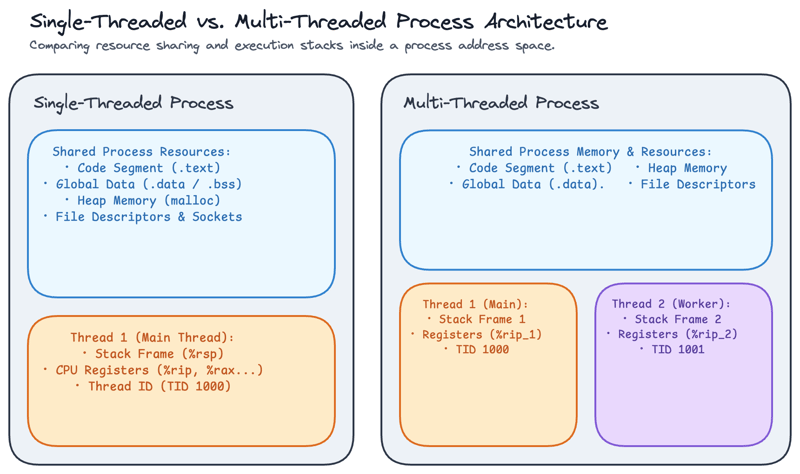
Explore what a thread actually is in Linux, how threads relate to processes, how the Linux kernel treats both as tasks (task_struct), and how kernel scheduling enables concurrency.

node-02 is back from a kernel upgrade but still shows Ready,SchedulingDisabled, and the Pods that can only run on it are stuck in Pending. Bring the node back into service and get the workload running, without touching the workload itself.
A storefront needs eight replicas, and the platform team wants them split down the middle between the two availability zones. An uneven split must be refused by the scheduler rather than quietly tolerated.
Create a PriorityClass for production workloads and patch an existing deployment to use it, ensuring critical services get scheduled first during resource contention.
Deploy a multi-container Kubernetes Deployment and ensure that no more than one Pod runs on the same worker node, without using a DaemonSet.
Nine hands-on challenges split into two sections. The resource section covers how requests, QoS classes, priority, and namespace quotas shape scheduling decisions. The placement section covers how affinity, topology spread, and dedicated nodes control where pods land. HPA closes the path by showing how requests drive autoscaling.