A Simple Sandbox Breakout: Spot It and Stop It

Premium Challenge
Upgrade your membership to unlock this and all other premium materials.
You're given SSH access to a CI host that might have been compromised. A sandboxed "agent" is running in the background - it's our prime suspect.
Your mission has two parts:
- Confirm the breakout. Look around the host for evidence that the sandboxed agent has escaped and is doing something on the host.
- Mitigate it. Neutralize the breakout so the agent can no longer touch the host. Do not stop or restart the sandbox itself - the sandbox VM must stay up for further investigation.
The verification task observes the host and checks if there are any recent signs of the breakout. If the host remains unaffected for at least 30 seconds, the challenge is considered solved.
Hint 1 - Where to start looking
Take a look around the host's / folder. Are there any suspicious files
there? Try removing them and see whether they come back.
Hint 2 - Noisy guests leave traces
Check the host's syslog / journal for any suspicious messages.
Hint 3 - Three pillars of sandboxing
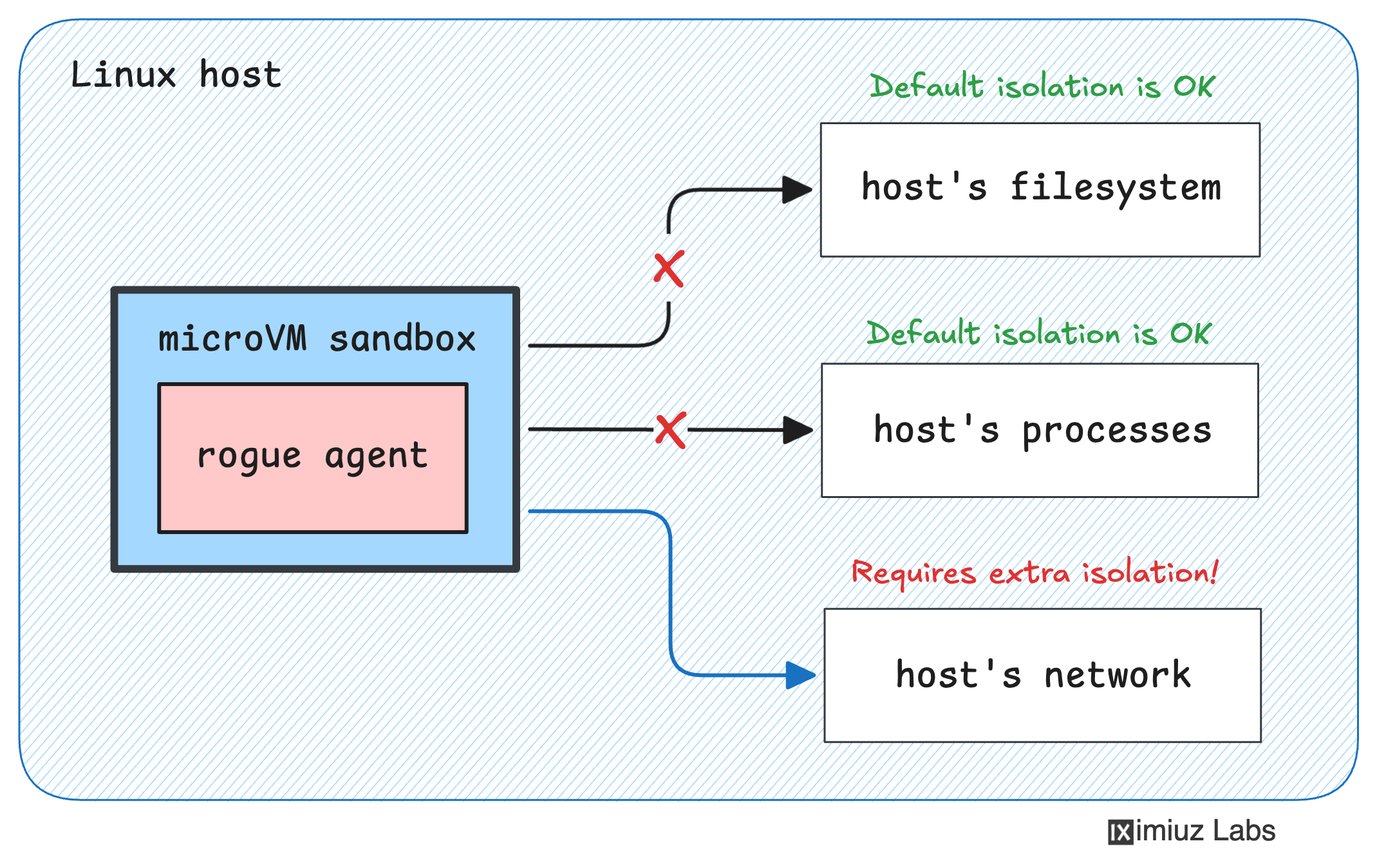
Sandboxing has three dimensions - process isolation, filesystem isolation, and network isolation. A microVM sandbox provides strong coverage of the first two categories. But is the network properly secured?
Hint 4 - Attack surface on the host
What can a sandboxed program talk to on the host? Check all the open ports on the host, and think about which of them should be better protected from untrusted workloads.
Hint 5 - The power of the Docker API
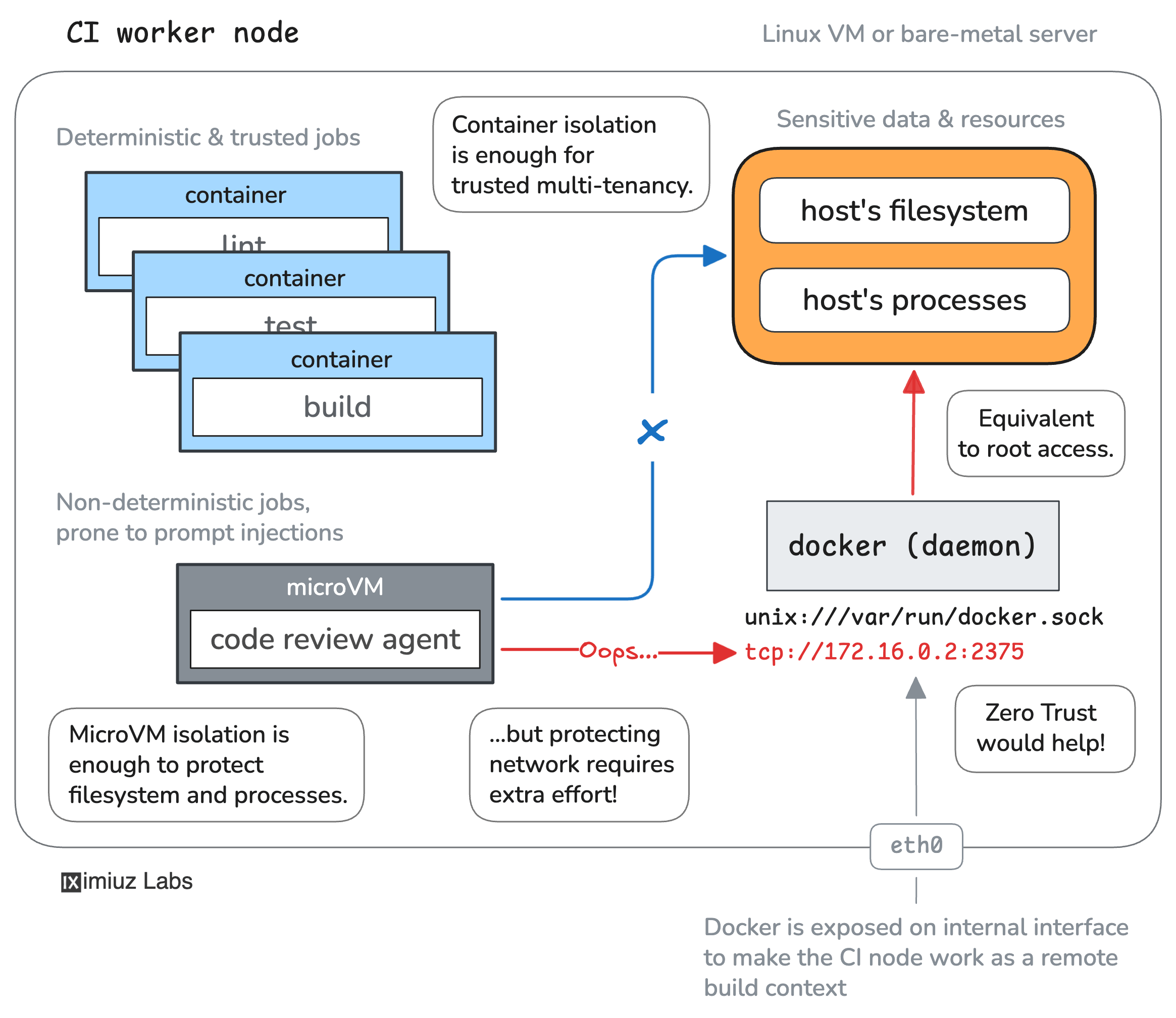
Did you know that gaining access to a Docker daemon's API is as powerful - and as bad - as gaining root access to the server? If the daemon is reachable without authentication, the game is essentially over.
Hint 6 - Shutting the door
Can you find a way to protect the local Docker daemon from being reached by a rogue sandboxed workload? There's more than one valid approach - anything from reconfiguring the daemon's listeners to adding packet-filtering rules in front of it will do.
But do not just kill the Docker daemon - the CI host must still be able to use it to build other projects.